Bolivia, known for its astonishing cultural diversity and breathtaking landscapes, is a true treasure in the heart of South America. At Responsible Travel, we provide everything you need to plan a rewarding and safe journey to this fascinating country.
Entry and Exit Requirements
Entrance:
- Passport: It must be valid for at least six months from the date of entry.
- Visa: Depending on your nationality, some visitors will require a visa.
- Migration Card: You will complete this document upon entry; keep it to present upon departure.
Exit:
Present the migration card to the immigration officers.
List of countries that require a visa to enter Bolivia
Bolivia classifies countries into three groups:
- Group 1 (visa-exempt): Citizens of countries such as the U.S., Canada, the European Union, Argentina, Brazil, and Chile do not need a visa for stays of up to 90 days.
- Group 2 (prior visa required): Countries such as China, India, and some African nations must obtain a visa at a Bolivian consulate.
- Group 3 (restricted visa): Countries such as Pakistan, Nigeria, and North Korea require specific authorization from the Ministry of Foreign Affairs of Bolivia.
Recommendation: Check with the nearest Bolivian consulate or embassy to verify the requirements according to your nationality.
Language
The official language of Bolivia is Spanish, although indigenous languages such as Quechua, Aymara, and Guarani are also spoken. In tourist areas, English is limited, so it is helpful to know basic phrases in Spanish.
Time Zone
Bolivia operates under the UTC -4 time zone and does not observe daylight saving time.
Currency
The official currency of Bolivia is the boliviano (BOB). It is easy to exchange U.S. dollars and euros at exchange houses and banks in major cities. In addition, credit cards are accepted in urban and tourist areas, but it is always advisable to carry cash for expenses in markets and rural areas.
Connectivity
Regarding connectivity, Wi-Fi is free in hotels, restaurants, and some cafes; keep in mind that in rural areas it may be a bit slow. Operators such as Viva, Tigo, and Entel offer prepaid SIM cards with mobile data for tourists. Note that cellular signal may be limited in mountainous areas and the Amazon.
Plugs and Adapters
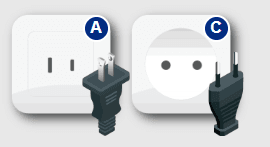
The voltage used in Bolivia is 220V at a frequency of 50Hz, and the plugs you will find there are Type A and Type C. Adapters will be necessary for travelers from countries with Type B plugs.
Health and Safety
Vaccinations
Yellow Fever: It is recommended for those planning to visit the Peruvian Amazon (regions such as Loreto, Ucayali, and Madre de Dios).
Hepatitis A and B: To prevent infections caused by contaminated food or water and contact with blood or bodily fluids.
Tetanus and Diphtheria: Ideal for any traveler, especially those planning to engage in outdoor activities.
Rabies: It is advisable for those visiting rural areas or engaging in activities involving animals.
Insect-Borne Diseases
Malaria and dengue: Present in low-altitude areas and the Amazon. It is recommended to use DEET-based repellent, long-sleeved clothing, and mosquito nets.
Chikungunya: Virus transmitted by mosquitoes in warm regions.
UV Rays and Altitude
- UV Rays: Solar radiation is intense at high altitudes such as La Paz and the Salar de Uyuni. It is recommended to use high-SPF sunscreen, sunglasses, and a hat.
- Altitude: Some cities, such as La Paz, have extreme altitudes (3,640 meters). Symptoms of altitude sickness include headache, nausea, and fatigue. We recommend resting upon arrival and staying well hydrated.
Healthcare System
Medical centers and private clinics in major cities such as La Paz and Santa Cruz provide top-quality care. However, infrastructure in rural areas may be limited. It is essential to have travel insurance that covers medical emergencies, especially if planning activities such as trekking or visits to the Amazon. Pharmacies are common in both urban and rural areas; however, some medications may require a prescription.
Emergency Numbers:
- National Police: 110
- Ambulances: 118
- Fire Department: 119